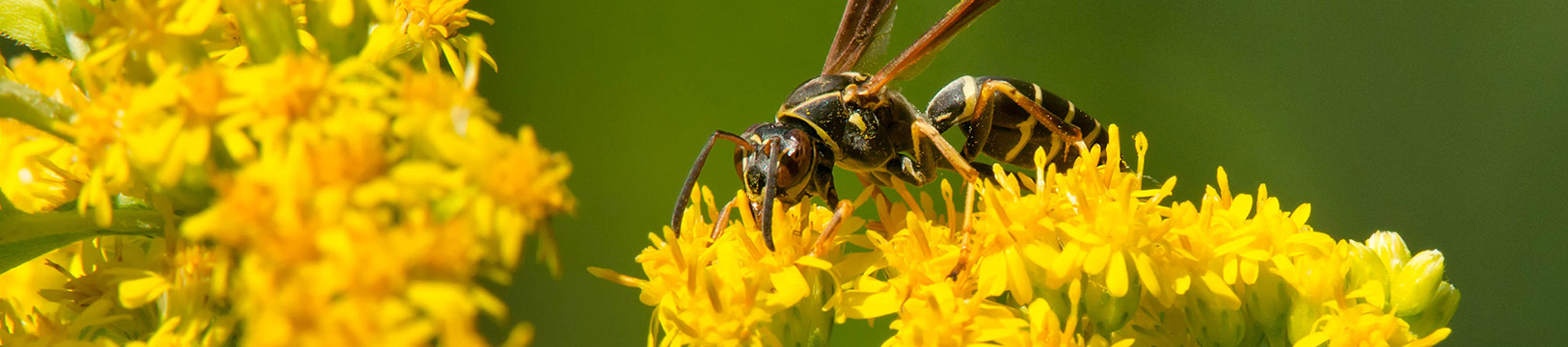
Paper wasps are slender, long-bodied wasps that typically measure between ¾ and 1 inch in length. Most species found around North Atlanta are brownish with yellow or reddish markings, though the European paper wasp has a yellow and black pattern that can make it easy to confuse with a yellow jacket.
One of the easiest ways to tell a paper wasp apart from other wasps is by watching it fly. Paper wasps have long legs that dangle noticeably below their bodies in flight, giving them a slow, almost lazy appearance compared to the quicker, more compact flight of yellow jackets.
Several paper wasp species are found throughout North Atlanta. The most common include the European paper wasp (Polistes dominula), which has bold yellow and black markings and is often mistaken for a yellow jacket; the Northern paper wasp (Polistes fuscatus), which is typically darker brown with yellow markings; and red paper wasps (Polistes carolina and related species), which are reddish-brown and commonly seen around homes, decks, and wooded properties.

Paper wasps follow a seasonal cycle. Queens that survived the winter emerge once temperatures warm up and begin building new nests. Colonies grow through the warmer months and reach peak size by mid- to late summer. Activity drops off as temperatures cool, and only newly fertilized queens survive to start the cycle over again.
Paper wasp nests are open and umbrella-shaped, made from chewed wood fibers mixed with saliva. Unlike yellow jacket nests, there's no outer shell — you can see the individual hexagonal cells where eggs and larvae develop. The nests are usually grayish-brown and attached to a surface by a single thin stalk called a petiole.
Most paper wasp nests stay relatively small, typically ranging from the size of a golf ball to a few inches across. A large, well-established nest might reach the size of a fist.
Paper wasps look for sheltered, horizontal surfaces to build on. Common nesting spots include:
Paper wasps feed on insects like caterpillars, flies, and beetle larvae, so yards with active gardens or landscaping can draw them in. They also seek out nectar and sweet liquids, which means flowering plants, hummingbird feeders, and open drinks can attract them.
More than anything, paper wasps are attracted to sheltered spots with overhead cover. Homes with covered porches, pergolas, and overhanging eaves give them exactly what they're looking for in a nesting site.
Paper wasps are generally less aggressive than yellow jackets or bald-faced hornets. They usually won't bother you unless you get too close to their nest or accidentally make contact with one.
That said, they can sting — and they can sting more than once. A paper wasp sting causes sharp, localized pain and swelling. For people with venom allergies, even a single sting can lead to a serious reaction. Because their nests are often built in high-traffic areas around homes, accidental encounters are more common than you might expect.
Paper wasps don't cause structural damage the way termites or carpenter bees do. However, nests attached to painted or finished surfaces can leave staining, and the constant foot traffic of wasps coming and going can deposit debris near entry points.
The bigger concern is the sting risk, especially for homes with children, pets, or family members with allergies. Nests near front doors, porch lights, and deck areas put people in close contact with the colony every time they step outside.
If you've spotted a paper wasp nest on your property, contact got bugs? Termite & Pest Solutions for help. Paper wasp nest removal is included with our Healthy Home Protection plans — our team handles nest knockdowns up to 25 feet as part of regular pest control service. That means nests get taken care of during scheduled visits before they have a chance to grow.
Trying to knock down a nest on your own might seem simple, but paper wasps often rebuild in the same spot within days. Our technicians treat the area to deter wasps from returning.
Reach out for a free quote, and we'll take it from there.
To make your property less inviting to paper wasps, we recommend:
Regular pest control treatments are the most effective way to stay ahead of paper wasps. Our team actively monitors for nests during every service visit. Contact us today to learn more about our plans.
No. Paper wasp colonies die off each fall, and old nests are abandoned. However, new queens may build nests in the same area if it offers the shelter and protection they seek.
Paper wasp colonies are usually much smaller than yellow jacket colonies. A mature nest may contain a few dozen adults, though larger nests can occasionally support more.
Homes provide many of the sheltered, protected surfaces paper wasps prefer for nesting. Eaves, porch ceilings, deck overhangs, shutters, and similar structures offer protection from rain, wind, and predators.
Most paper wasps die when cold weather arrives. Only fertilized queens survive the winter by hiding in protected locations such as tree bark, wood piles, sheds, garages, attics, and other sheltered areas. When temperatures warm in spring, these queens emerge and begin building new nests.
Whether you've found a nest under your eaves or noticed increased wasp activity around your property, got bugs? Termite & Pest Solutions can help. Contact us today for a free quote.
Get In Touch
If you've got bugs or rodents infesting your home or yard, we can banish them for good! We are local pest control pros servicing North Metro Atlanta and are proud to offer quality treatments that deliver results.

Blog Posts


