Why Cumming’s Soil Favors Termites
Georgia’s red clay soil plays a major role in termite activity, and in Cumming and the surrounding parts of Forsyth County, it can be especially important.
Red clay holds moisture for a long time after rain. It does not drain as well as sandy or loamy soil does, so water can linger near the surface and keep the soil damp around foundations, crawl space edges, patios, porches, and landscaping beds.
That matters because subterranean termites need steady moisture to survive. They live underground, travel through soil, and use mud tubes to move between the ground and the wood in a home.
In Cumming, that means the soil around many foundations can remain favorable to termites throughout much of the year. Summer rain, irrigation runoff, shaded yards, and drainage issues can make the area around a home even more inviting.
Why Wooded Lots Can Raise Termite Risk
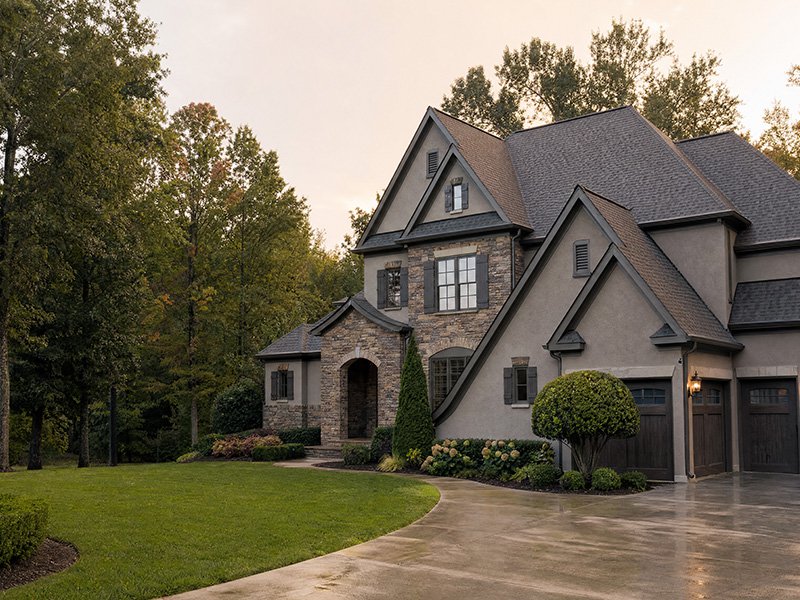
One of the things people love about Cumming is the tree cover. Many homes sit on wooded lots, on larger properties, or in neighborhoods with nearby green space. You see it in parts of South Forsyth County, along Post Road, Bettis-Tribble Gap Road, Castleberry Road, and around homes that back up to tree lines or undeveloped land.
That setting can be beautiful, but it can also create conditions that are termite-friendly.
Fallen branches, old stumps, buried roots, and decaying wood near the edges of wooded lots give termites natural food sources close to the home. Leaf litter, shade, and ground cover help keep the soil cooler and damper beneath. When termite colonies expand, they move through the soil looking for the next available food source.
That is why homes that back up to woods, greenbelts, or natural areas may be more likely to deal with termite activity than homes on open, cleared lots. The same wooded buffer that gives you privacy can also keep termite colonies close to the structure.
How Lake Lanier Moisture Affects Termite Activity
Homes near Lake Lanier often have one more thing working against them: moisture.
Lakefront and lake-adjacent properties around Buford Dam Road, Bald Ridge Marina Road, Pilgrim Mill Road, and nearby neighborhoods can deal with higher humidity, morning fog, shaded slopes, and soil that stays damp longer after rain. Many of these homes also have crawl spaces instead of slab foundations, which adds another moisture concern.
A crawl space that does not ventilate well can hold humidity underneath the home. If there is wood close to the soil, standing moisture, poor drainage, or insulation that traps damp air, termites may find it easier to find the conditions they need.
For homes near Lake Lanier, termite protection is not something to put off until there is visible damage. The risk often starts outside or underneath the home, long before a homeowner sees anything inside.
Why Termite Damage Often Goes Unnoticed
One of the hardest things about termites is that they do not usually announce themselves right away.
You may not see insects crawling across the floor. You may not notice damaged wood at first. In many cases, subterranean termites stay hidden underground, inside mud tubes, behind walls, under flooring, or near crawl space framing.
By the time you notice signs of termites, there may already be activity below the surface. Warning signs can include mud tubes along the foundation, discarded wings near windows or doors, soft or hollow-sounding wood, bubbling paint, or trim that seems damaged for no obvious reason.
That is why termite inspections matter so much in Cumming. A home can look perfectly normal from the living room while termite activity is developing around the foundation, crawl space, garage, porch, or nearby wood sources outside.
Small gaps around utility lines, cracks near the foundation, porch supports, garage edges, and wood that sits too close to the soil can all give termites a way to move from the ground toward the structure.
What Termite Protection Looks Like
At got bugs?, we inspect the home and property first, then recommend the termite protection option that makes the most sense based on what we find.
Trelona® ATBS bait stations are placed around the home to monitor for termite activity. When termites find the stations while foraging, they feed on the bait and carry it back to the colony. Over time, the treatment works through the colony and helps eliminate it.
For homes that need a liquid treatment, Termidor® can be applied to the soil around the foundation. It creates a treated zone that termites cannot detect or avoid. As they move through the soil, they come into contact with the treatment and transfer it to other termites in the colony.
Trelona® ATBS bait stations can be included as part of a broader Healthy Home Protection plan, giving homeowners termite monitoring and protection along with year-round coverage for common household pests. If the inspection shows that a liquid treatment is the better option, our team can explain it separately and walk you through the next step.
If you are not sure whether your home has termite activity, a professional inspection can give you a clearer answer. Our team checks the areas where termite problems often start, including foundation edges, crawl spaces, garages, moisture-prone areas, wood-to-soil contact points, and other conditions around the property.
When Should Cumming Homeowners Act?
The best time to address termite risk is before termites infest. That is especially true in Cumming, where red clay soil, wooded lots, crawl spaces, and Lake Lanier moisture can all work together around a home.
However, if you’ve observed termites swarming or noticed other termite signs, do not wait. Termite damage can get more expensive the longer it goes unaddressed.
Cumming homeowners should also know that termite swarmers are most common from late winter through spring, usually February–April. Swarmers are winged reproductive termites that leave mature colonies to start new ones nearby. If you see them around your home, it means a mature colony is close. You can learn more about when termites swarm in North Metro Atlanta and what that activity means for your property.
Whether you are seeing warning signs or simply want to be proactive, the team at got bugs? can inspect your home and explain what is happening in plain language.
Frequently Asked Questions About Termites in Cumming
Can new construction in Cumming get termites?
Yes. New homes are not immune. Construction disturbs the soil, and wood debris left behind during clearing can create termite-friendly conditions around the property. Homes on recently cleared wooded lots may still need preventive termite protection, even if the house is new.
Is termite damage covered by homeowners insurance?
Typically, no. Standard homeowners insurance policies typically do not cover termite damage because it is considered a preventable maintenance issue. That is one reason proactive termite protection is so important.
Do termites stay active in Cumming during winter?
Yes. Subterranean termites can remain active underground during winter, especially when temperatures are mild or the soil stays warm enough below the surface. Activity may slow during colder periods, but termite colonies do not simply disappear until spring.
Request Your Free Termite Quote
If you live in Cumming and want to know where your home stands, reach out to got bugs? Termite & Pest Solutions. We have been protecting homes in Forsyth County and throughout the North Atlanta Metro from termites since 2006, and our team can inspect your property, explain what we find, and recommend the right next step. Request a free termite quote to get started.