

Quick Answer: The Fastest Way to Tell Them Apar
If you only remember three things, remember these:
- German cockroaches are the most likely to create a true indoor infestation (especially kitchens and bathrooms).
- Asian cockroaches often look like German roaches, but they’re typically outdoor roaches that fly toward lights and may wander indoors.
- American cockroaches are the big ones often associated with moist areas like basements, crawl spaces, utility rooms, and plumbing.
How to Tell Them Apart (Simple Clues That Work in Georgia Homes)
Use these practical clues. You don’t need to be an entomologist—where you found it and what it did are often more useful than tiny markings.
American Cockroach
- Size: noticeably large (often around 1.5" or more)
- Where you’ll usually see them: basements, crawl spaces, garages, utility rooms, near plumbing and drains
- Most telling “why”: moisture + shelter + access points (gaps around plumbing/utility penetrations)
German Cockroach
- Size: smaller (often around 1/2"–5/8")
- Where you’ll usually see them: kitchens and bathrooms—behind/under appliances, inside cabinets, around pantry items
- Most telling “why”: indoor harborage near food/water; they can multiply fast
Asian Cockroach
- Size: similar to German (small)
- Where you’ll usually see them: near doors/windows and around lights; more likely to be noticed in the evening/night
- Most telling “why”: outdoor origin + strong attraction to lights; may fly indoors
NOTE: In Georgia, people sometimes call multiple species “waterbugs.” If you’re seeing roaches near drains, it can be helpful to also check out our Oriental cockroach guide since they’re commonly mistaken for other dark roaches.
American Cockroach: The “Big Roach” That Usually Points to Moisture
What they look like:
- Larger body (often noticeably bigger than a German roach)
- Reddish-brown overall appearance
Where the often show up:
- Crawl spaces and basements
- Garages
- Utility rooms
- Around plumbing, drains, and other damp areas
What it usually means:
American cockroaches can infest structures, but in many homes they’re a sign that the roaches have a comfortable pathway in and a reason to stay—moisture and shelter. In North Atlanta, we often see this tied to:
- Humid crawl spaces
- Plumbing leaks (even small ones)
- Gaps around pipes and utility penetrations
Next steps:
- Fix moisture issues first (leaks, condensation, ventilation)
- Seal entry points around plumbing and exterior penetrations
- Keep cardboard and clutter out of damp storage areas
Learn more: American cockroaches: identification & control.
German Cockroach: The Indoor Infestation Risk You Don’t Want to Ignore
What they look like:
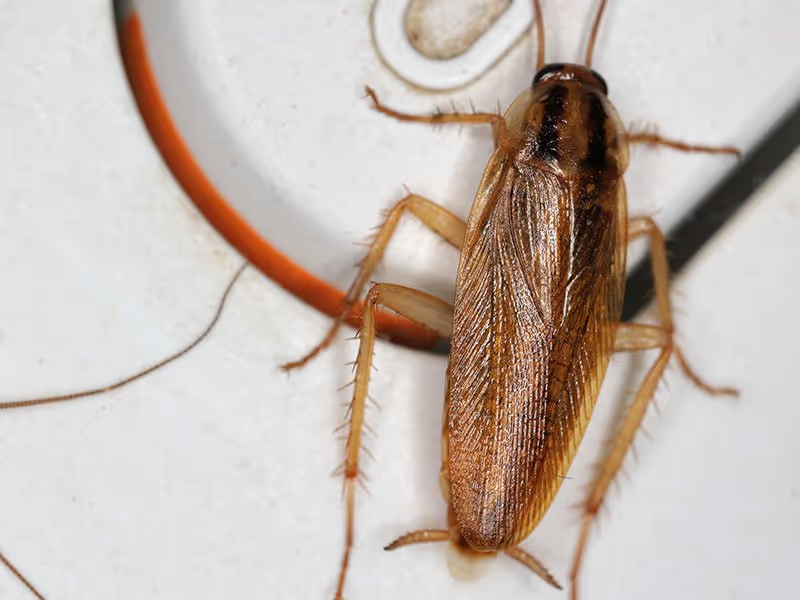
- Smaller than American roaches
- Light brown/tan color
- Often described as having “two dark stripes” behind the head (helpful clue, but not the only one)
Where you’ll likely find them:
- Kitchens (behind refrigerators, stoves, and dishwashers)
- Bathrooms
- Pantry and food-storage areas
- Inside cabinet hinges, appliance seams, and tiny wall voids
What it usually means:
If you’re seeing German cockroaches, the biggest concern is speed. German roaches are known for reproducing quickly and hiding in extremely tight spaces.
If you’re already seeing them during the day, or you notice multiple roaches of different sizes, it’s a good idea to act quickly.
Immediate steps that can help limit activity:
- Tighten up food sources: wipe grease, store food in sealed containers
- Reduce water sources: don’t leave standing water in sinks overnight
- Vacuum cracks/crevices (especially behind/under appliances)
- Avoid “bombing” with foggers—this often drives roaches deeper into walls and spreads them
Related reading: Are cockroaches worse in summer? (timing in Georgia matters more than most people realize).
Learn more: German cockroaches: identify, prevent & control.
Asian Cockroach: The German Look-Alike That’s Usually Coming From Outside
Asian cockroaches are one of the biggest sources of “false alarms” in Georgia because they can look very similar to German cockroaches. In fact, one of the most common misidentifications we see in North Atlanta homes is Asian cockroaches being treated like German roaches.
The easiest real-world clue:
- Asian cockroaches are strong fliers and are attracted to lights, especially at night.
Where North Atlanta homeowners tend to notice them:
- Around porch lights and garage doors
- Near windows and screens
- When doors open in the evening
What it usually means:
Asian cockroaches often live outdoors in leaf litter and landscaped areas. They may fly indoors, but that doesn’t always mean you have a breeding population inside the kitchen like you would with German roaches.
Ways you can help reduce activity:
- Reduce night lighting that attracts flying insects (or switch to less-attractive bulbs)
- Keep mulch/leaf litter pulled back from the foundation
- Seal and screen: fix torn screens, add door sweeps, seal gaps
Learn more: Asian cockroaches: identification & control.
A Simple “Where Did You See It?” Checklist
If you’re not sure what you saw, answer these questions:
- Did it fly toward a light at night? That leans Asian.
- Was it inside the kitchen, behind appliances, or in cabinets? That leans German.
- Was it big, and near a damp area or drain? That leans American (or sometimes Oriental).
If you’re unsure which species you’re dealing with, we offer professional identification for North Atlanta homeowners—because the wrong treatment often makes the problem worse.
If you’re in Forsyth County and want a location-specific overview, our article on Common Cockroaches in Cumming can also help narrow things down.
What to Do Next: Prevention That Works
No matter the species, prevention in Georgia comes down to a few dependable habits:
- Seal the perimeter: gaps around doors, utility lines, and plumbing penetrations are highways for pests
- Control moisture: cockroaches (and many other pests) thrive when humidity stays high
- Reduce food access: crumbs, grease, pet food, and open pantry items matter more than most homeowners think
For a broader home checklist, start here: 10 Ways to Bug-Proof Your Home.
When to Call a Pro (and What a Good Plan Looks Like)
If you’re seeing roaches repeatedly, spotting them in multiple rooms, or noticing them during the daytime, it’s worth getting help—especially for German roaches.
At got bugs? we focus on eco-friendly, family-conscious pest control using Integrated Pest Management (IPM) principles. That means we look for the “why” behind the pest issue (entry points, moisture, harborage), not just a quick spray-and-go. We also follow up with year-round treatments to help prevent new pest activity.
If you’re not 100% sure which cockroach you’re dealing with, we can help you get a clear answer—and a plan that actually fits your home. Our team works with North Atlanta homeowners to identify the source of the problem and stop it at the root. Get started here!
Frequently Asked Questions About Cockroaches in North Atlanta
Which cockroach species is most common in North Atlanta homes?
German cockroaches are the most common cockroach found inside North Atlanta homes, especially in kitchens and bathrooms.
Do flying cockroaches mean I have an infestation?
Not necessarily. In Georgia, flying roaches seen at night are often Asian cockroaches, which usually come from outdoors and are attracted to lights. German cockroaches rarely fly.
Is seeing one cockroach in my house a big deal?
It depends on the species and where you found it. One German cockroach indoors can be a concern, while a single American or Asian cockroach is often an outdoor or moisture-related issue.


