Quick Signs You May Have Carpenter Ants
- Large black ants indoors
- Sawdust-like debris near trim
- Ant trails at night
- Rustling in walls
- Winged ants indoors
What Carpenter Ants Really Do to a House
Let’s clear up a common worry.
Carpenter ants do not eat wood the way termites do.
But they do excavate wood to build tunnels and nesting galleries. Over time, that can mean real damage, especially when they nest in wood that is already damp or softened.
Common Signs You Have Carpenter Ants Indoors
You don’t have to be an expert to spot a problem. Here are the signs we hear about most from North Atlanta homeowners.
You Keep Seeing Larger Ants Inside
Carpenter ants are often larger than the tiny “kitchen ants” people are used to. If you’re consistently seeing bigger ants near windows, baseboards, or sinks, pay attention.
If you want help with identification, our carpenter ant guide is a helpful resource.
You Notice Ant Trails at Night
Carpenter ants often move around more when it’s quiet. If you flip on a light late at night and see ants traveling along a consistent path, that’s a clue they have a routine.
You Find “Saw Dust” or Debris Near Trim or Baseboards
Homeowners sometimes describe it as sawdust, pepper-like specks, or little piles that keep coming back after cleaning.
That debris, also called frass, can be a sign that the ants are pushing material out of their tunnels.
You Hear Faint Rustling in a Wall
This one sounds strange until it happens.
Some people hear a soft rustling in a wall void, especially at night. It does not always mean carpenter ants. But it is worth checking out.
You See Winged Ants Indoors
Winged ants can show up when a colony is mature and trying to expand.
It’s also easy to confuse flying ants with termite swarmers. Either way, it’s a “don’t ignore it” moment.
What Attracts Carpenter Ants to Homes in North Atlanta?
Carpenter ants don’t pick a house at random. They’re usually responding to conditions.
Moisture Problems (The Big One)
In our area, humidity and rain can make small water issues turn into bigger ones.
Common moisture sources include:
- Dripping pipes under sinks
- Poor ventilation in crawl spaces
- Leaky roof lines or flashing
- Water-damaged window frames
- Damp wood around doors, decks, and porches
If there’s a single thing to remember, it’s this.
Carpenter ants love damp, softened wood because it’s easier to excavate.
A Nearby Outdoor Nest
Sometimes the main nest is outside and the ants are foraging inside.
Common outdoor nesting spots include:
- Rotting tree stumps
- Wood piles stored near the house
- Mulch beds that stay wet
- Old landscape timbers
This is one reason we like a full perimeter-focused approach, not just “spray where you saw them.” Our home pest control plans are built around prevention as much as treatment.
Easy Access Points
Carpenter ants don’t need a big opening.
Gaps around utility lines, worn weather stripping, cracks in trim, and small openings near soffits can be enough.
If you’re also seeing other pests, that can be a sign your home has a few entry points that need attention. Our broader pest identification guide can help you connect the dots.
Why “Spot Treating” Often Doesn’t Fix Carpenter Ants
This is where a lot of people get frustrated.
They spray a visible trail. The ants disappear. Then they come back.
That happens because:
- Those sprays usually don’t reach the nest
- Carpenter ants can have satellite nests
- The ants you see are often just foragers
If you’ve already tried treating and it didn’t stick, this article may help: Why Ant Infestations Keep Coming Back After You Spray
How to Get Rid of Carpenter Ants
If these ants are showing up in your house, you deserve more than a quick spray-and-a-wave.
At got bugs?, we’ve been helping families in Cumming, Marietta, Roswell, and throughout North Metro Atlanta deal with carpenter ant problems since 2006. We’re family-operated, we live here too, and we take a very “fix it the right way” approach.
That means we focus on two things at the same time.
We control the ants you’re dealing with today. Then we help make your home a lot less inviting for them tomorrow.
Here’s what that looks like when we handle carpenter ants.
Step 1: Identify the Ant and the Story Behind It
We start by confirming what you’re actually seeing.
Carpenter ants, odorous house ants, pavement ants, and termites can all get lumped into “ants.” But the plan changes depending on what it is.
We also look at the bigger story. Are they coming in for food, or is there likely a moisture issue that created a nesting spot?
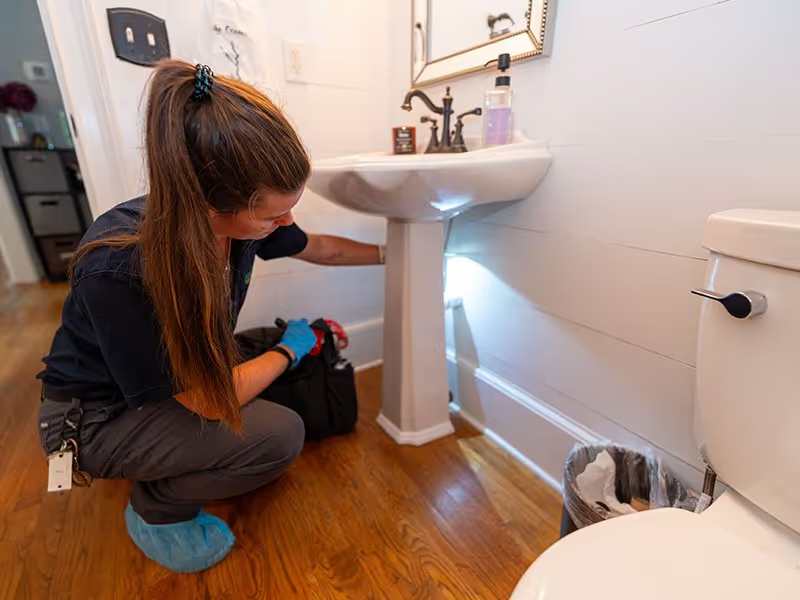
Step 2: Do a Thorough Inspection, Not a Quick Lap
This is where many generic treatments fall short.
We slow down and look for the places this species loves in North Atlanta homes, especially where moisture likes to hide.
We commonly check:
- Window and door frames (especially if there’s been past water intrusion)
- Bathrooms, laundry rooms, and kitchens (plumbing and humidity)F
- Crawl spaces and basements (ventilation and damp wood)
- Exterior trim, soffits, and roof lines (leaks and wood edges)
- Mulch beds and wood-to-soil contact around the foundation
If we see conditions that could support carpenter ants, we’ll say it plainly and show you what we’re seeing.
Step 3: Treat for Colony Control With Family Safety in Mind
Control is not about chasing a trail across your floor.
It’s about reaching the colony and interrupting the routes they use.
We don’t rely on just one treatment.
We combine targeted treatment, smart placement, and prevention steps. And we’re careful about where products go, because kids and pets live here too.
Step 4: Help Prevent the “Same Problem Again” Call
This is the part homeowners tell us they appreciate most.
We don’t just treat and disappear. We point out the conditions that made carpenter ants comfortable.
Depending on your home, that may include:
- Moisture sources to fix or monitor (drips, leaks, ventilation)
- Simple exclusion spots to seal (common entry points)
- Landscaping tweaks that keep dampness off the foundation
- Wood contact issues that make nesting easier
If you want this handled as part of ongoing protection, our home pest control plans are built for year-round peace of mind.
When You Should Call a Pro for Carpenter Ants
If this were my neighbor asking me over for coffee, here’s what I’d tell them.
Carpenter ants are one of those pests where waiting usually doesn’t make things easier. It usually just gives the colony more time to settle in.
These are the moments when it’s smart to get a professional involved sooner rather than later.
You’re Seeing Them in More Than One Spot
If ants are showing up in the kitchen and a bathroom, or upstairs and downstairs, that’s often a sign they’re not just “passing through.” There may be a nest nearby, or there may be more than one activity area.
You’ve Had a Recent Water Issue
In North Atlanta, we see this all the time.
A small roof leak, a window that’s been letting in water, or a slow drip under a sink can quietly create the damp wood carpenter ants love.
If you had a leak in the last few months and now you’re seeing carpenter ants, those two things may be connected.
You’re Seeing Debris That Looks Like Sawdust
When homeowners tell us, “I keep sweeping it up and it comes back,” that’s a big clue.
It doesn’t always mean major damage. But it does mean we should take a closer look.
You’ve Already Tried Treating and They Keep Returning
If you’ve sprayed, used other store-bought ant control products, or tried a quick fix and you’re still seeing ants, don’t beat yourself up.
Carpenter ants are good at surviving surface-level treatments.
That’s usually the point where an inspection and a colony-focused plan save you time, money, and stress.
Want us to take a look? You can request a free quote here.
How to Lower the Chances of Carpenter Ants Coming Back
This is the part we love, because it’s about protecting your home, not just reacting to a bug problem.
We’re not asking you to turn into a handyman or start a weekend project marathon. Most prevention comes down to reducing moisture and removing easy nesting opportunities.
Here are a few ways you can make your home less appealing to these wood-damaging ants.
- Keep gutters and downspouts moving water away from the foundation
- Fix drips fast, even the “tiny” ones under a sink
- Store firewood away from the home and off the ground
- Trim branches that touch the roof or hang over the house
- Keep mulch from staying piled high and wet against the foundation
- Keep crawl spaces as dry and well-ventilated as possible
The easiest way to stay ahead of carpenter ants is with a year-round home pest control plan.
With routine treatments and a focus on prevention, we help keep the perimeter protected year-round.
Small issues are caught early.
And your home becomes much less inviting to ants, roaches, spiders, and other house-infesting pests in Georgia.
It’s the kind of service that lets you breathe a little easier, because you’re not starting from scratch every time something pops up.
Carpenter Ant FAQs (North Atlanta Homeowners Ask Us These a Lot)
Do Carpenter Ants Mean I Have Termites, Too?
Not necessarily.
Carpenter ants and termites both involve wood, so it’s an easy worry to have. But they’re different pests with different habits.
If you’re seeing winged insects or you’re finding debris and you’re not sure what it is, that’s a good time for an inspection, so you’re not guessing.
Will Carpenter Ants Go Away on Their Own?
Typically no. If the conditions that attracted them are still there, like damp wood or an easy entry point, the activity usually keeps going. Sometimes it even gets worse when the weather shifts.
If I Only See One or Two Carpenter Ants, Is That Still a Problem?
It can be.
One or two ants can be a random wanderer. Or it can be the “tip of the iceberg,” especially if you see them more than once in the same area. If you’re seeing them repeatedly near a sink, a window, or a specific wall, it’s worth having it checked.
How Fast Can Carpenter Ants Cause Damage?
It depends on the colony's size and whether the wood is already damp or softened.
The bigger concern we see in North Atlanta is that carpenter ants often show up alongside a moisture issue. Fixing that root cause is what protects the home long-term.
Why Do Carpenter Ants Show Up After Rain?
Rain and humidity can push ants to forage more, and moisture can make nesting spots more comfortable.
If you notice carpenter ants right after storms, it’s a clue to look for water intrusion, damp mulch, or moisture around trim and roof lines.
Can Carpenter Ants Live in Brick Homes?
Yes. Even if your home is brick, there’s still wood framing, trim, roof lines, window frames, and other areas where carpenter ants can nest.
Ready To Get Carpenter Ants Out Of Your House?
If carpenter ants are showing up indoors, you don’t have to guess.
Our highly trained pest control technicians will help you figure out what’s going on, what’s causing it, and how to fix it in a way that’s safe for your family and effective long-term.
Reach out today and let our local team handle it.