

What "Palmetto Bug" Actually Means
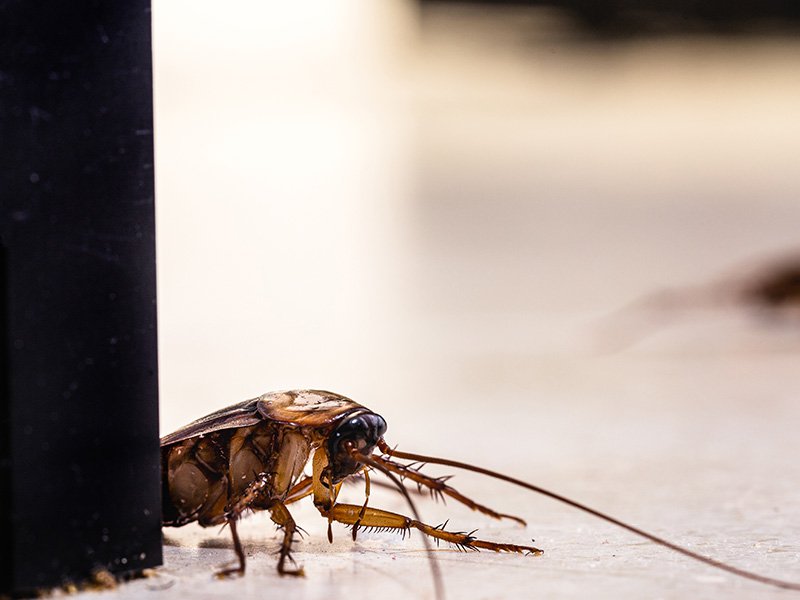
"Palmetto bug" is the polite Southern name (or regional term) for a couple of large cockroach species. The most common are the American cockroach — reddish-brown, up to two inches long, with a pale figure-eight marking just behind the head — and the smokybrown cockroach, a shiny, dark mahogany roach that thrives in our tree canopy.
Both have wings, although smokybrown cockroaches are much stronger fliers and are attracted to lights. American cockroaches can fly, too, but they're not nearly as strong in the air.
Here's the important part: unlike German cockroaches, which set up shop in kitchens, bathrooms, and other parts of homes all year long, these two species live primarily outdoors. That's the key to understanding why they suddenly show up when they do.
Why You May Notice More Palmetto Bugs in Late Summer
American and smokybrown cockroaches can be active throughout the warm season. Heavy rain can disturb protected outdoor hiding places, while hot or dry conditions can make shaded, moisture-rich areas around homes more attractive. Once they're close to the structure, openings around doors, utility lines, vents, foundations, and plumbing give them a way inside.
Late summer can also mean plenty of cockroach-friendly conditions around the property. Leaf litter has accumulated. Gutters may be holding debris and moisture. Vegetation is thick. Crawl spaces, garages, basements, and other protected areas offer shade and humidity.
That doesn't mean every big roach you see indoors is part of an infestation in your kitchen. In many cases, it has wandered or flown in from somewhere around the structure.
Smokybrown roaches add a North Atlanta twist. They love our mature hardwoods, nesting in tree holes, leaf litter, and other humid, protected areas. They may also turn up around clogged gutters, rooflines, soffits, attics, and crawl spaces. Homes tucked under a heavy tree canopy can be especially attractive to them.
Where They Get In
Palmetto bugs rarely chew their way inside — they take advantage of openings that already exist.
Common entry points around North Metro Atlanta homes include:
- Gaps and cracks around the foundation
- Spaces around plumbing and utility penetrations
- Unscreened foundation and crawl space vents
- Worn weatherstripping around doors
- Gaps beneath garage doors
- Openings around windows and exterior doors
- Roofline and soffit gaps
- Floor drains and plumbing openings in basements and other lower areas
Because these roaches can live close to the structure, even a fairly small opening may be enough to give them access.
More Than a Nuisance
A palmetto bug racing across the floor is unpleasant enough, but large cockroaches can create other problems once they're inside.
Cockroaches can pick up bacteria and other contaminants as they move through drains, garbage, decaying organic material, and other unsanitary areas. Those contaminants can then be transferred to surfaces they cross.
Their droppings, shed body parts, and other debris can also contribute to indoor allergens and may aggravate asthma or allergy symptoms in sensitive people. Larger or established cockroach populations can sometimes produce a noticeable musty odor as well.
An occasional large roach doesn't necessarily mean you have an indoor breeding population. But if you're seeing them regularly, finding them in several areas of the house, or noticing other signs of activity, it's worth finding out where they're coming from.
Why DIY Usually Falls Short
Store-bought sprays can kill a cockroach you can see, but that doesn't necessarily address the conditions bringing large roaches close to your home in the first place.
American and smokybrown cockroaches may be sheltering around drains, crawl spaces, attics, landscaping, tree holes, leaf debris, wall voids, or other protected areas. Killing the one that ran under the refrigerator doesn't close the gap it used to get inside or address activity around the exterior.
Long-term control is usually more effective when it combines targeted pest treatments with attention to entry points, moisture, and cockroach hiding places around the structure.
How got bugs? Keeps Cockroaches Out
The best time to deal with palmetto bugs is before they're racing across your kitchen floor.
Our Healthy Home Protection plan includes regular exterior pest treatments to help prevent common household pests from entering your home. If there's an active pest problem inside, we'll treat indoors as needed.
American, smokybrown, and Oriental cockroaches are among the pests covered by our year-round residential pest control plan, and if a covered pest turns up between regularly scheduled visits, we'll come back and re-treat at no additional charge.
Serving North Metro Atlanta since 2006, we know where large roaches tend to hide and how to eliminate them.
If big roaches have started showing up this summer, contact got bugs? Termite & Pest Solutions for a free quote.


